
Walk through any well-built Melbourne home and you will notice a pattern. The bathroom has an awning window. The kitchen has an awning window. The laundry, the ensuite, the stairwell – awning aluminium windows keep showing up in the rooms where ventilation matters most and space is tight. That is not a coincidence. It is the result of a design that solves problems other window types simply cannot.
VK Windows and Doors manufactures custom awning aluminium windows for Australian homes at our Kilmore factory, and we see the same specification pattern repeated across hundreds of builder orders every year. Here is a room-by-room breakdown of why.
What Makes an Awning Window Different
An awning window is hinged at the top and opens outward from the bottom using a chain winder or crank handle. When open, the sash angles away from the wall like a small awning, which is where the name comes from.
That design creates two advantages no other common window type can match at the same time:
- Rain-safe ventilation. The angled sash deflects rain while still allowing airflow. You can leave an awning window cracked open during a Melbourne downpour without water entering the room.
- Compression seal when closed. The sash presses firmly into the frame, creating a tight seal around the entire perimeter. This is fundamentally different from the brush seals used on sliding windows, which rely on friction contact and wear over time.
By comparison, a casement window is hinged on the side and swings fully outward, offering maximum airflow but less rain protection. A sliding window glides horizontally within its frame, which saves space but uses brush seals that gradually lose effectiveness. A double hung slides vertically and shares the same brush seal limitation.
For a detailed side-by-side comparison of all four types, VK’s window comparison guide covers ventilation, sealing, cost, and room suitability in one place.
Bathrooms and Ensuites: The Room Where Awning Windows Dominate
Bathrooms generate more moisture than any other room in the house, and they need ventilation that works regardless of the weather outside. An awning window handles this better than any alternative because:
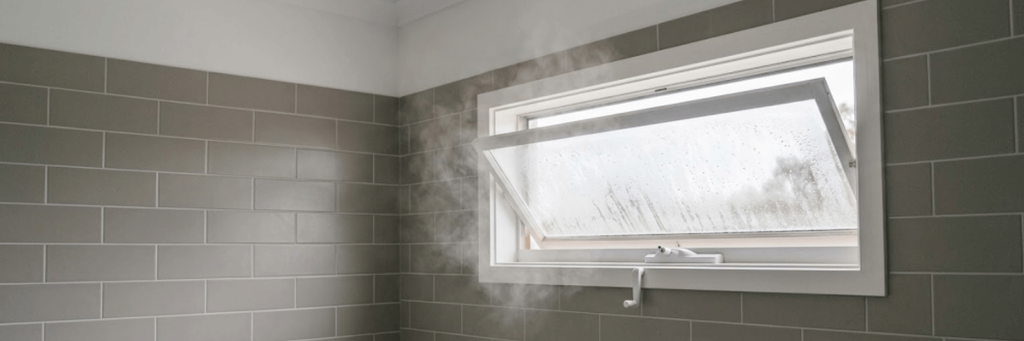
- It stays open during a shower, even in wet weather. The angled sash keeps rain out while steam escapes. No other operable window lets you do this safely.
- It sits high on the wall for privacy. Awning windows are commonly placed above head height, which eliminates the need for frosted glass in many bathroom layouts while still delivering airflow right where the steam accumulates.
- It reduces reliance on mechanical exhaust fans. Natural ventilation through an awning window clears moisture faster and quieter than a ceiling fan, especially in a well-positioned ensuite.
- The compression seal keeps draughts out in winter. When it is 4 degrees outside on a Melbourne July morning, the last thing you want is cold air whistling through worn brush seals while you are stepping out of the shower.
VK’s Trozon awning window, with its 90mm x 44mm frame, is specifically engineered for high wind load and water penetration resistance, making it a strong fit for exposed bathroom walls.
Kitchens: Above-Bench Placement Solves a Real Problem
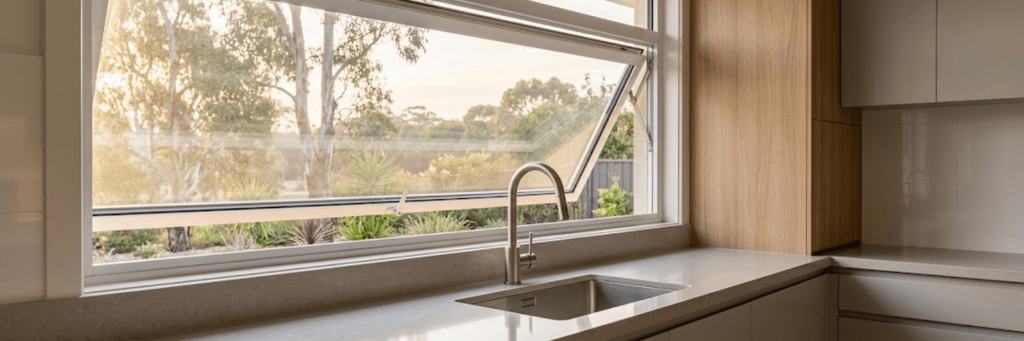
Kitchen windows sit behind sinks, taps, and splashbacks. That creates a reach problem. You need a window you can operate without leaning across a hot cooktop or wet bench.
Awning windows solve this with chain-winder operation. A small handle mounted on the frame lets you open and close the window with one hand, without reaching past the tap or mixer. Compare that to a sliding window, where you need to lean forward and push the sash sideways, often with wet hands.
The outward opening sash also avoids another common annoyance: it does not interfere with anything on the bench. A casement window swinging inward would collide with a draining rack or herb pot. An awning window opens outward, out of the way entirely.
For cooking steam and odours, the upward angle of the open sash creates a natural chimney effect, drawing warm air out through the top of the opening. This works particularly well when paired with a window on the opposite wall for cross-ventilation.
Laundries and Stairwells: Small Spaces, Big Ventilation Needs
Laundries are often the smallest rooms in a house, yet they generate significant moisture from dryers and washing. The NCC requires natural ventilation openings equal to at least 5% of the floor area for habitable rooms, and while laundries often rely on mechanical ventilation, an awning window provides a passive backup that works without power.
Awning windows fit into tight wall spaces without sacrificing internal room. Because the sash opens outward, it does not intrude into already cramped laundry layouts. A standard 600mm-wide awning window above a washing machine delivers effective airflow without interfering with shelving or cabinetry.
Stairwells present a similar challenge: you need ventilation in a space you cannot easily reach. An awning window with a chain winder mounted at a comfortable height lets you ventilate a two-storey stairwell without a ladder.
Melbourne Winters: Why Compression Seals Matter More Than You Think
The Australian Government’s YourHome guide to passive design notes that awning and casement windows, which seal by compression, control air leakage considerably better than sliding windows and doors, whose seals tend to lose their shape from constant friction (YourHome, “Glazing”).
Air leakage can account for 15 to 25% of heat loss during winter (ATTMA/ABAA, 2019). In a Melbourne home where overnight winter temperatures regularly drop below 5 degrees, that leakage translates directly into higher gas or electricity bills and increased condensation on cold window frames.
Here is the practical difference:
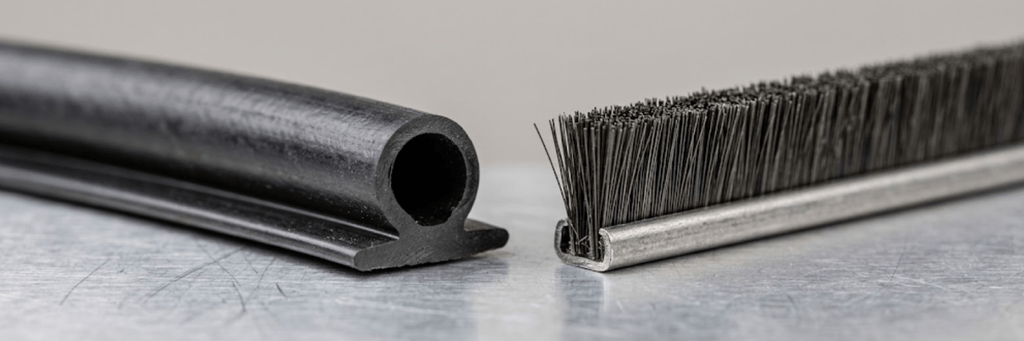
- Compression seal (awning and casement): The sash presses into a continuous rubber or neoprene gasket around the full perimeter. The seal improves under wind pressure because the wind pushes the sash harder into the frame.
- Brush seal (sliding and double hung): Bristles or fins sit in a track and make contact with the moving sash. Over time, the bristles flatten, dust accumulates, and the seal degrades. Maintenance can restore performance, but it requires regular attention.
If you are building or renovating in Melbourne and your wet areas face south or west, awning windows with compression seals are one of the most effective and affordable ways to reduce winter heat loss through your windows.
The Child Safety Angle: NCC 125mm Opening Limit Explained
The NCC requires that openable windows in certain locations (bedrooms in Class 2 and 3 buildings, and windows where the floor below is 2m or more above the surface beneath) be fitted with devices that restrict the opening so a 125mm sphere cannot pass through. This is the child-fall prevention standard, often referred to as the “Kids Don’t Fly” initiative.
Awning windows handle this requirement neatly. A pre-restricted chain winder limits the sash opening to 125mm or less while still providing ventilation. For situations where you want more airflow at night, a night-vent striker plate provides a secondary locked position that allows the window to open slightly beyond the restriction while still being secured against forced entry.
VK’s awning windows come factory-fitted with keyed locks as standard and can be specified with NCC-compliant restriction hardware for any project that requires it.
Pairing Awning Windows with Fixed Panels: The Most Cost-Effective Whole-Room Strategy
You do not need every window in a room to open. Fixed glazing is cheaper to manufacture, provides better thermal performance (no seals to leak), and gives you larger uninterrupted views. The smart approach is to combine fixed panels where you want light and views with awning inserts where you need ventilation.
A typical configuration for a Melbourne living area or bedroom:
- One or two large fixed panels for light and views
- One or two smaller awning windows positioned high or at the side for controlled airflow
- The fixed panels handle the thermal heavy lifting while the awning inserts deliver ventilation exactly where the room needs it
This approach reduces per-room window spend while improving overall energy performance. The fixed panels achieve lower U-Values than any operable window, and the awning inserts provide rain-safe ventilation with compression sealing.
VK manufactures both fixed and operable aluminium windows to custom sizes, so the fixed-plus-awning combination can be tailored to any opening without compromise.
Frequently Asked Questions
Can awning windows be used as emergency egress?
Generally no. The chain winder restricts the opening, and most awning configurations do not provide the clear opening size required for emergency escape. For bedrooms that require egress-compliant windows, a casement window alternative for full opening is the better option.
What is the maximum size for an aluminium awning window?
Standard chain-winder awning windows work well up to approximately 1200mm wide and 1200mm high. Larger sashes may require a crank handle for smoother operation. Beyond that, structural engineering and wind load calculations determine the practical limit for your location and exposure.
Do awning windows work with fly screens?
Yes. Because the sash opens outward, the fly screen sits on the inside of the frame and does not interfere with the window operation. Retractable fly screens are ideal for awning windows and roll neatly out of sight when not in use. VK supplies flyscreens nationwide and barrier screens for QLD and NSW projects.
How do I clean the outside glass of an upper-floor awning window?
Awning windows are easier to clean from inside than most people expect. When fully open, the sash angles outward and you can reach around it to wipe the exterior surface from inside the room. Compare that to a sliding window, where the outer pane sits in a fixed track and is often impossible to reach without a ladder.