
Five years ago, if someone asked a builder to name the best-performing window type, aluminium sliding windows would not have made the shortlist. They were the budget option: affordable, practical, easy to install, but thermally average. That reputation stuck. The problem is, it is no longer accurate. A wave of engineering upgrades has quietly turned the sliding window into a genuine contender for energy-efficient, high-performance builds, and a lot of builders are still specifying the old version without realising the new one exists.
VK Windows and Doors manufactures latest-generation thermally broken aluminium sliding windows at our Kilmore factory, including our Zen sliding window system engineered specifically for projects that demand strong weather resistance and energy compliance. Here are the five upgrades that changed the game.
Why Sliding Windows Had a Reputation Problem (and Why It Is Out of Date)
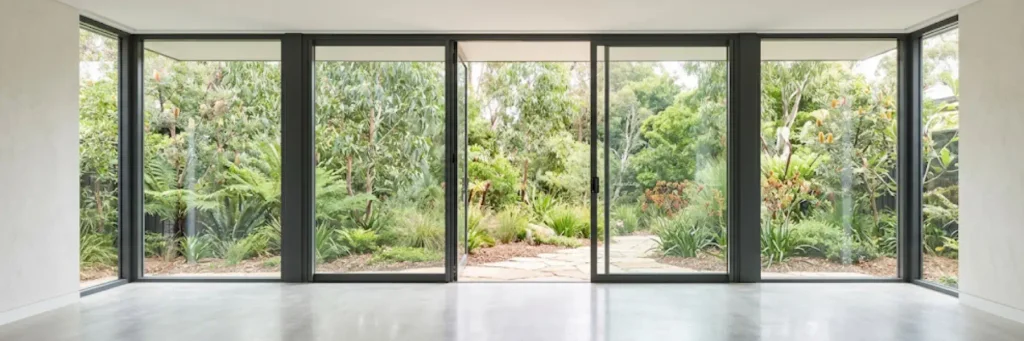
The traditional sliding window had three weak points. First, brush seals. The bristles that filled the gap between the sash and the track wore down over time, allowing air to leak through. Second, no thermal break. The aluminium frame conducted heat straight through from outside to inside. Third, limited glazing options. Most sliders shipped with single glazing or basic double glazing that did the minimum.
All three of those weak points have been addressed by manufacturers who saw the NCC 2022 energy requirements coming and invested in R&D ahead of the deadline. The result is a sliding window that performs closer to awning and casement systems than most builders expect.
Upgrade 1: Compression Seals Are Replacing Brush Seals
This is the single most impactful change. Traditional sliding windows used brush seals, rows of fine bristles that contacted the sash as it moved along the track. These seals worked reasonably well when new, but the bristles flattened over time and accumulated dust, reducing their effectiveness year after year.
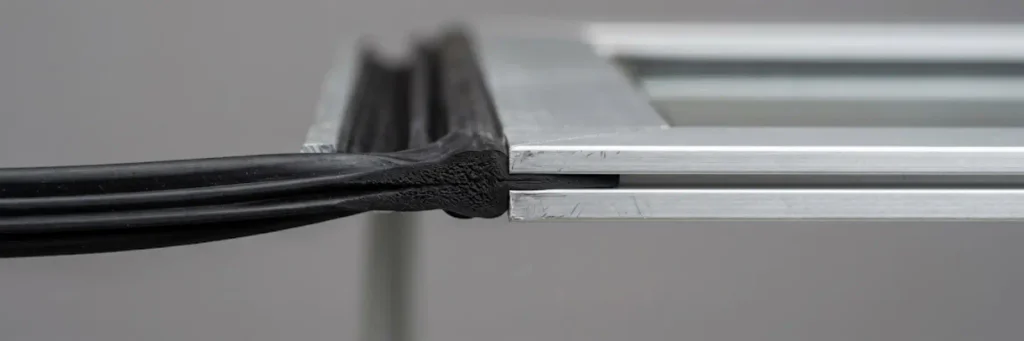
The Australian Government’s YourHome guide to passive design notes that awning and casement windows, which seal by compression, control air leakage considerably better than sliding windows with brush seals that gradually wear from friction (YourHome, “Glazing”).
Modern sliding windows now incorporate compression seals that engage when the sash is locked into the closed position. The sash presses against a continuous rubber or neoprene gasket, creating a seal similar to what you get on an awning or casement window. The difference in airtightness is noticeable immediately, especially on windy days.
What to ask for on the spec sheet: look for “compression seal” or “compression weatherstrip” in the technical data. If the spec only mentions “pile seal” or “brush seal,” you are looking at the older technology.
Upgrade 2: Thermally Broken Tracks Are Now Standard on Quality Sliders
Thermal break technology has been common in awning and casement frames for years. The principle is simple: a polyamide strip inserted between the inner and outer aluminium profiles prevents heat from conducting straight through the frame.
Applying that same principle to a sliding track was more challenging because the track carries the weight of the sash and needs to handle constant lateral movement. Manufacturers solved this by engineering polyamide thermal breaks into both the base track and head section, maintaining structural integrity while cutting thermal bridging.
This matters even more for sliding windows than other types because sliders typically have more frame length relative to glass area. A standard two-panel slider has a meeting rail in the middle plus top and bottom tracks. Without thermal breaks, that adds up to a lot of conductive aluminium. Trend’s ThermaRes sliding window, for example, uses thermally broken frames to achieve U-values down to 2.0 W/m²K with double glazing (Trend Windows, 2025), a figure that would have been unthinkable for a slider five years ago.
VK’s Zen sliding window addresses this with a frame profile designed to minimise thermal bridging while maintaining smooth sash operation even at larger panel sizes.
Upgrade 3: Ultra-Slim Profiles Deliver More Glass with the Same Strength
Advances in aluminium extrusion have allowed manufacturers to produce narrower frame profiles without sacrificing structural performance. The result is slimmer sightlines, meaning more glass and less frame when you look at the window from inside the room.
For sliding windows, this matters in three practical ways:
- More natural light. A narrower frame lets more glass into the same rough opening, which directly increases the amount of daylight reaching the interior.
- Cleaner aesthetics. The architectural trend toward minimal frames is strong across Melbourne’s new builds, townhouses, and apartment projects. Slim-profile sliders meet that brief without resorting to more expensive frameless or structural glazing systems.
- Better energy modelling. More glass area relative to frame area generally means better NatHERS modelling outcomes, because glass with Low-E coatings outperforms even thermally broken aluminium on U-value.
VK’s Asus sashless window takes this concept further, with two panes of glass sliding vertically or horizontally with minimal visual obstruction, ideal for sunrooms, pool areas, and alfresco spaces where uninterrupted views are the priority.
Upgrade 4: Smart-Home Integration Is No Longer a Gimmick
Motorised sliding windows with integrated sensors are moving from the luxury segment into mainstream specification. The technology is straightforward: a low-profile actuator built into the window frame drives the sash open or closed, controlled by a smart-home hub, smartphone app, or voice assistant.
The practical applications that actually justify the cost:
- Rain sensors. The window closes automatically when rain is detected. Useful for rooms where you want continuous ventilation but cannot monitor the weather all day, such as home offices and living rooms.
- Scheduled venting. The window opens at set times (early morning, late evening) for cross-ventilation, then closes automatically. This supports passive cooling strategies without requiring anyone to be home.
- Temperature and humidity triggers. Paired with indoor sensors, the window opens when humidity rises above a threshold, which is particularly useful in kitchens and bathrooms.
- Voice activation. Integration with Google Home or Amazon Alexa lets occupants open or close windows hands-free.
One important note: the motorised track hardware needs to be built into the frame at manufacture. You cannot reliably retrofit a standard sliding window with full automation. Aftermarket smart sensors (rain, temperature) can be added to trigger alerts, but the physical opening and closing mechanism requires factory integration.
Upgrade 5: Glazing Options Designed for Sliding Configurations
The glazing that goes into a modern slider is not the same product that shipped five years ago. Manufacturers now offer glazing packages specifically optimised for horizontal-track operation, accounting for the weight distribution and seal compression that sliding windows demand.
Key glazing options for different situations:
- Double glazing with Low-E coating. The baseline for any NCC 2022 compliant build. Low-E on surface 2 or 3, depending on whether you are prioritising winter heat retention or summer heat rejection.
- Argon gas fill. Improves insulation by roughly 15-20% over air-filled cavities. The sealed unit needs to be manufactured to high tolerances to prevent gas leakage over time, so specify from a manufacturer with NATA-accredited testing.
- Acoustic laminated glass. For homes near busy roads, flight paths, or train lines. Laminated glass with a PVB interlayer reduces noise transmission, and when paired with a compression-sealed slider, the acoustic improvement over an old brush-sealed system is substantial.
VK supplies sliding windows with obscure, tinted, energy-efficient, and double glazing options as standard configurations, with custom specifications available for projects that require specific acoustic or thermal performance targets.
What This Means for Your Next Build: Updating Your Standard Window Spec
If your standard sliding window specification has not changed since 2020, here are the four lines worth updating on your window schedule:
- Seal type. Change from brush seal to compression seal. This is the single biggest performance improvement per dollar spent.
- Thermal break. Specify thermally broken tracks and head sections. Not optional if you are targeting 7-star NatHERS in Melbourne’s Climate Zone 6.
- Glazing minimum. Move from single glazing to double glazing with Low-E as the baseline. Argon fill for south and west orientations.
- Frame profile. Consider slim-profile options where views and natural light are priorities, particularly for living areas and bedrooms.
What stays the same: aluminium’s core advantages have not changed. A quality powder-coated aluminium sliding window lasts 30 to 45 years, outperforming uPVC by roughly a decade in most Australian conditions. Aluminium does not warp, swell, or become brittle under UV exposure, and it handles Melbourne’s temperature swings without losing its shape.
For projects where the opening needs to go bigger than a standard slider allows, VK also manufactures matching sliding door systems with compression seals and full indoor-outdoor opening solutions that share the same thermal break and glazing technology.
Ready to upgrade your sliding window spec? VK Windows and Doors manufactures thermally broken, compression-sealed aluminium sliding windows at our Kilmore factory for builders across Victoria. Get a free quote or call our team to discuss your next project.
Frequently Asked Questions
Are compression-seal sliding windows available in standard sizes or only custom?
Both. Quality manufacturers now include compression seals across their standard sliding window range, not just custom orders. Custom sizing ensures the seal mates perfectly with the opening, but the upgrade is no longer a bespoke-only feature.
How much more do thermally broken sliding windows cost than standard sliding windows?
Expect a 15-25% premium over standard non-thermally-broken aluminium sliders of the same size. For a typical Melbourne home with six to eight sliding windows, the additional cost is often recovered within three to five years through lower heating and cooling bills.
Can smart-home integration be retrofitted to existing sliding windows?
Generally no, not for full motorised operation. The actuator and track hardware need to be built into the frame during manufacture. You can add standalone weather sensors and smart alerts to existing windows, but the physical automation of opening and closing requires a purpose-built frame.
Do compression seals wear out faster than brush seals on sliding windows?
Compression seals on modern sliding windows are designed for a 20-year service life with normal use. Brush seals typically start degrading noticeably after 8-12 years as bristles flatten and collect debris. Compression seals are easier to inspect visually and can be replaced without dismantling the frame in most systems.