
Here’s the short answer: on raw thermal numbers, uPVC windows win. On real-world performance for most Australian homes, thermally broken aluminium windows close that gap enough that the decision usually comes down to your build type, your climate and your budget, not a clear winner. If you want the reasoning rather than just the verdict, here it is.
Thermal Performance: Why Aluminium Conducts Heat
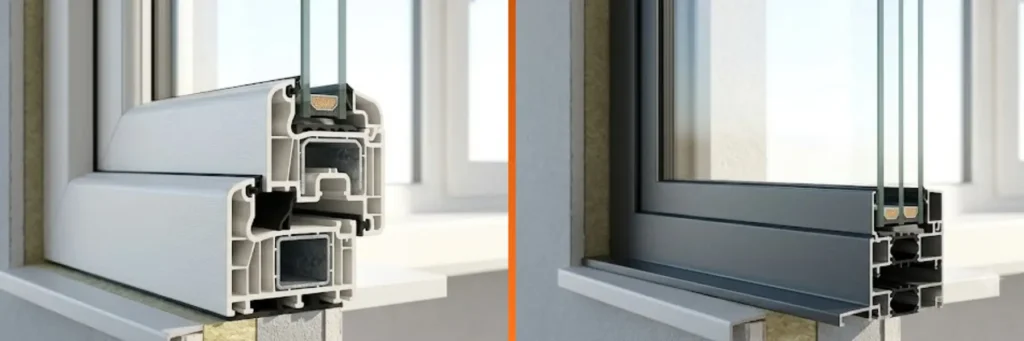
Aluminium is a metal, and metals conduct heat extremely well. That’s exactly why a standard aluminium frame will feel cold to the touch on a winter morning and warm on a summer afternoon, because it’s transferring outdoor temperature straight through to the indoor surface. uPVC, being a rigid plastic, simply doesn’t conduct heat anywhere near as efficiently, which is why unbroken uPVC profiles post noticeably lower U-values than standard aluminium.
- uPVC frames are widely recognised as having thermal performance similar to timber, one of the better-insulating frame materials available.
- Standard (non-thermally broken) aluminium is a poor insulator by comparison, and its Window Energy Rating Scheme (WERS) rating typically reflects that.
- Double glazing itself, regardless of frame, can reduce heat loss through a window by up to 30 per cent compared with single glazing (source: Australian Government, energy.gov.au, “Windows”).
Thermal Breaks Explained: When Aluminium Closes the Gap
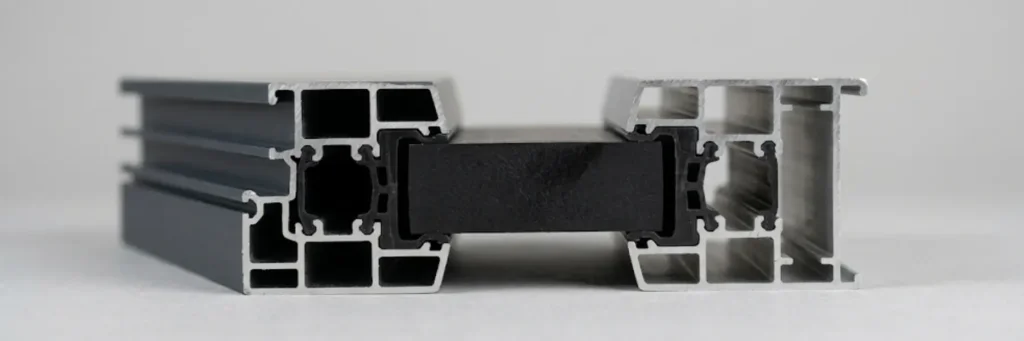
A thermal break is a strip of low-conductivity material, usually a structural polymer, inserted between the interior and exterior sections of an aluminium frame. It interrupts the metal-to-metal path that heat would otherwise travel along, which is the entire reason unbroken aluminium struggles in the first place.
According to Sustainability Victoria’s guidance on energy-efficient window frames, installing a thermal break in an aluminium frame meaningfully reduces the heat transfer that would otherwise occur through the metal, bringing performance much closer to timber and uPVC. It won’t fully close the gap in every climate, but for most Australian residential and architectural projects, a quality thermally broken aluminium system is a genuinely comfortable, code-compliant choice, not a compromise.
Noise Reduction: Frame Matters Less Than You’d Think
Noise control comes mostly from the glass, not the frame; thicker glass, laminated glass, or a wider cavity between panes all do more for sound than swapping aluminium for uPVC. That said, uPVC’s denser, multi-chambered profile does dampen frame-transmitted noise slightly better than a hollow aluminium extrusion. If a busy road or flight path is your main concern, the glazing specification deserves more attention than the frame debate.
Durability and Maintenance
- Aluminium typically lasts around 30 to 40 years, resists warping and rot, and needs only occasional cleaning. It’s a strong performer in coastal environments once properly finished, since aluminium naturally resists rust (unlike steel), though powder coating quality matters near the ocean.
- uPVC typically lasts around 25 to 30 years, never needs painting, and won’t corrode. In humid or coastal air it holds up well, though it’s more prone to expansion in extreme heat than metal.
- Both materials sit well ahead of timber on maintenance, which typically needs repainting or resealing every few years regardless of climate.
Cost Difference: Per Window and Per m²
Across Australia, double glazing overall (frame plus glass) ranges from roughly $300 to $1,500 per square metre, with aluminium framing generally landing toward the lower to middle end of that range and premium timber toward the top (source: Canstar, “How much does double-glazing cost?”, March 2025). uPVC in Australia is typically priced in the middle of that spread once imported hardware and profile costs are factored in, since it’s a smaller, more specialised market here than in Europe. Thermally broken aluminium sits above standard aluminium but below most timber options, which is one reason it’s become the practical middle ground for architects and builders.
Why Australia Builds With Aluminium While Europe Uses uPVC
This is the genuine forum debate, and the answer is more about history and manufacturing scale than performance. Aluminium extrusion became the default in Australian residential construction decades ago because it was cheap, light, fast to fabricate locally, and simple to mass-produce for a growing housing market. uPVC, by contrast, became the European standard partly because stricter energy codes arrived there far earlier, creating enough demand to build a large local uPVC manufacturing base. Australia’s energy standards have tightened more recently, through the National Construction Code’s move to a 7-star NatHERS minimum for new homes, which is pushing more architects and builders to specify thermally broken aluminium or uPVC where a decade ago standard aluminium would have been the automatic pick.
Which Suits Which Build
- New builds: thermally broken aluminium or uPVC both meet current energy targets comfortably; choice often comes down to sightline preference and budget.
- Renovations: aluminium’s slim profile is easier to match to existing openings and older facades without major structural changes.
- Bushfire zones: aluminium frames are generally easier to certify to higher Bushfire Attack Levels, since the material itself won’t ignite.
- Coastal properties: both perform well with the right specification; aluminium needs quality powder coating and marine-grade hardware, uPVC needs UV-stable, tropical-grade profiles.
Ready to Choose the Right Frame for Your Project?
Every home is a different mix of climate, budget and architectural style, so the “right” frame is rarely a one-size-fits-all answer. VK Windows & Doors manufactures and supplies custom aluminium windows and doors for residential, commercial and architectural projects across Australia, with thermally broken options built to perform in real conditions, not just on a spec sheet.
Explore our custom aluminium windows and doors range, read more about our approach, browse our aluminium casement windows and aluminium sliding doors, then get in touch for a straightforward, no-obligation quote.
Frequently Asked Question
Are uPVC windows better than aluminium windows in Australia?
uPVC has better raw thermal performance, but thermally broken aluminium closes much of that gap and often suits Australian architectural styles, bushfire requirements and renovation projects better.
Do aluminium windows need a thermal break in Australia?
For most climates and current energy targets, yes. A thermal break significantly cuts heat transfer through the frame compared with standard aluminium, improving comfort and reducing condensation risk.
Which frame lasts longer, uPVC or aluminium?
Aluminium typically lasts 30 to 40 years, while uPVC typically lasts 25 to 30 years, though both comfortably outlast timber on maintenance requirements.