
You’ve probably already filled in one of those “get your free quote” forms, waited two days for a callback, and still walked away without a single dollar figure. It’s the most common complaint we hear, and honestly, we get why it’s frustrating. You just want to know if you’re looking at $3,000 or $30,000 before you invest a Saturday in a home visit.
So here’s the number, upfront. Across most of Australia, double glazed windows typically cost $500 to $1,100 per square metre for the glazing and frame, or roughly $600 to $2,500 per window fully installed, depending on frame material, size and glass specification. A full home replacement (around 10 to 15 windows) usually lands somewhere between $15,000 and $40,000. That’s the honest range, no asterisks. Now let’s get into why your project might sit at one end of it or the other.
Cost by Frame Material
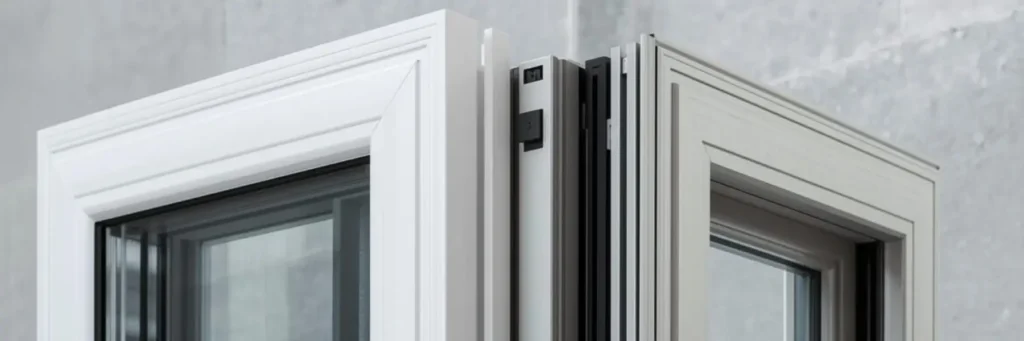
Frame material is the single biggest driver of price, and the differences are bigger than most people expect.
- Aluminium – typically $500 to $800 per m². Strong, low-maintenance and the standard choice for most Australian homes and architectural projects; thermally broken aluminium narrows the performance gap with uPVC.
- uPVC – typically $600 to $1,100 per m². Excellent insulation and a quieter home, though the frame itself carries a higher upfront cost than aluminium.
- Timber – often $600 to $1,500 per m², plus ongoing painting and sealing. Beautiful for heritage homes, but the highest lifetime cost of the three.
A recent Australian cost comparison puts the overall double glazing price range at $300 to $1,500 per m², with aluminium framing generally sitting toward the lower end and timber toward the top once quality and finish are factored in (source: Canstar, “How much does double-glazing cost?”, March 2025).
If you’re weighing up aluminium against the alternatives for a Melbourne renovation, our aluminium windows and doors overview covers where thermally broken aluminium sits performance-wise against uPVC and timber.
Cost by Window Type
Window style changes the price almost as much as the frame does, because of hardware, glass area and how the sash operates.
- Fixed windows – the cheapest option, since there’s no moving hardware.
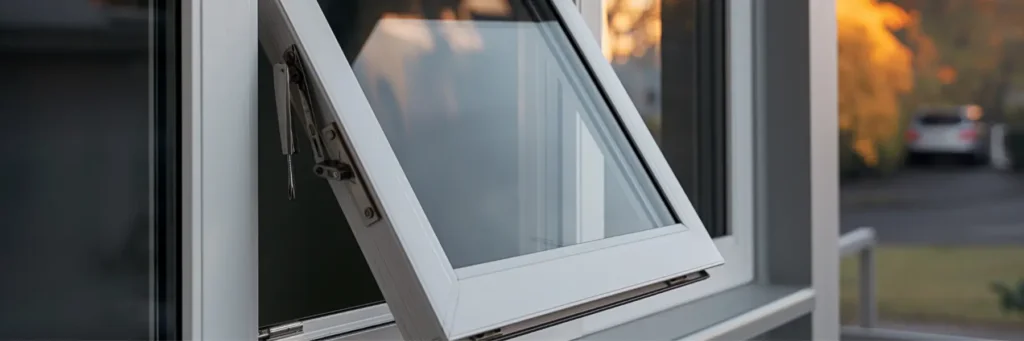
- Awning windows – mid-range; the hinge mechanism and weatherproofing add cost.
- Sliding windows – moderate cost, popular for larger openings.
- Double hung windows – typically the priciest window type, due to the counterbalance mechanism and dual sashes.
If you’re comparing options for a project, our awning windows, casement windows and sliding doors ranges give a feel for how frame aspect and hardware shift the price within a single style.
What Actually Makes a Quote Blow Out
Most sticker shock doesn’t come from the glass. It comes from everything around it.
- Access – multi-storey homes, tight side passages, or removing balustrades to fit new units all add labour hours.
- Custom sizes – anything outside standard stock dimensions means bespoke fabrication, which costs more per unit.
- Glass specification – Low-E coatings and argon fill genuinely improve performance, but each upgrade adds to the base price.
- Structural rework – if a reveal has rotted or a lintel needs attention, that’s a separate cost from the window itself.
- Disposal and make-good – removing old frames, patching plaster and repainting reveals rarely appear in the headline price.
Retrofit vs Full Replacement
Retrofitting (adding a secondary glazing unit to an existing frame) is typically 40 to 60 per cent cheaper than a full replacement, since the original frame, reveals and finishes stay untouched. It suits heritage properties or frames still in good structural condition. Full replacement costs more upfront but resets the frame’s lifespan and lets you change the window’s operation, size or style entirely. If your existing frames are timber and sound, retrofitting is worth investigating before you commit to a full-replacement budget.
“Why Did I Get Quoted $20k?”
This is the forum-famous number, and it’s usually not a rip-off. A $20,000 quote on a modest home is almost always a full-home replacement figure, not a single-window price, covering supply, custom fabrication, removal of old frames, installation labour and make-good across every opening in the house. Break it down per window and it typically lands in the same $1,000 to $2,500 range quoted above. The number feels shocking as a lump sum; it’s far less shocking once divided by 12 or 15 windows.
Payback Period: The Energy Savings Maths
In Melbourne’s climate zone, double glazing can cut heat loss through windows by a meaningful margin, which translates into lower heating and cooling bills over winter and summer. Victoria’s Energy Upgrades program also offers upfront point-of-sale discounts on eligible double glazing installations, which can meaningfully reduce the net cost before payback calculations even begin, with the Victorian Government’s Energy Upgrades program confirming discounts can reach up to $210 per 10 square metres of glazing for eligible households under current program guidelines (source: Victorian Government, “Window glazing discounts”, Victorian Energy Upgrades). Most Australian homeowners report recouping the upgrade cost within five to ten years through reduced energy bills, faster in colder regional areas, slower in milder coastal climates where the heating load is smaller to begin with.
Frequently Asked Questions
How much do double glazed windows cost per square metre in Australia?
Expect $500 to $800 per m² for aluminium and $600 to $1,100 per m² for uPVC, with timber often exceeding $1,000 per m² once ongoing maintenance is factored in.
Is double glazing worth it in Australia?
For most homes in cooler climate zones like Melbourne, yes. The insulation benefit is smaller in consistently warm coastal regions, where shading and glass coatings often matter more than glazing thickness.
What’s cheaper, retrofit or full replacement double glazing?
Retrofit is typically 40 to 60 per cent cheaper, since it reuses the existing frame. Full replacement costs more but resets the window’s lifespan and lets you change size or style.